
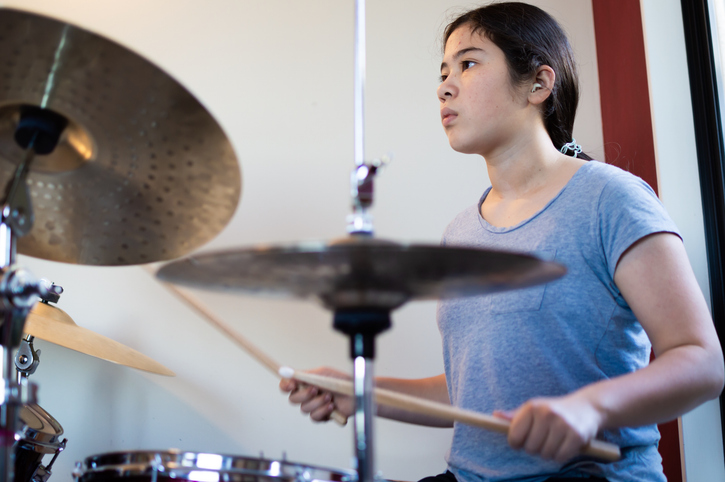
Spending more time taking part in arts and crafts, playing musical instruments and reading for pleasure during mid-adolescence is associated with improved exam results at age 16.
While engaging more regularly in physical activity is also linked with improved educational attainment, increasing the time spent sleeping tends to have a negative impact.
What the researchers looked at
Researchers from the University of East Anglia analysed data on more than 1,400 people born across the UK in 2000-02 who are taking part in the Millennium Cohort Study. They looked at information on young people’s daily activities reported in time-use diaries at age 14. The researchers then examined data on their academic performance at age 16 from National Pupil Database records.
On weekdays, study participants spent around 62% of their time sleeping, 2% in physical activity, 10% using media, 3% in school-related activities, 4% in hobbies and 18% in domestic activities. On weekends, they spent approximately 59% of their time sleeping, 14% using media, 8% in hobbies and 19% with domestic activities.
What the study found
The research team aimed to estimate how adjusting the share of time taking part in these activities would impact young people’s educational attainment at age 16. They found that reallocating 20 minutes to hobbies from other activities was mostly associated with greater academic achievement, while reducing the time spent was consistently linked to poorer exam results. This was also the case for physical activity.
Substituting time from any of the activities to sleep was associated with lower academic achievement. Surprisingly, reallocating time from sleep to increased media use was associated with better exam results. However, increasing the time spent using media over hobbies or domestic tasks was linked with lower educational attainment.
Reading for pleasure and musical activities have been associated with improved cognitive performance, in the form of memory of picture sequences or sustained attention.
The researchers explained: “The present study highlights that providing time for young people to engage in specific types of hobbies may offer opportunities for learning that could further enhance academic attainment. Reading for pleasure and musical activities have been associated with improved cognitive performance, in the form of memory of picture sequences or sustained attention.”
“However, it should also be noted that previous research has shown that young people aged 10–15 years old from the lowest income backgrounds are less likely to participate in hobby activities compared to young people from wealthier backgrounds. Improving access to stimulating and rewarding activities could help to level the educational playing field and enhance the future prospects of teens from more disadvantaged homes.”
Read the full paper
Adolescents’ time-use and academic attainment: A longitudinal, compositional analysis in the Millennium Cohort Study by Maloney, C.M.C., Atkin A.J., Beaumont L.C., Dainty, J.R. & Warburton V.E. was published in PLOS One.