


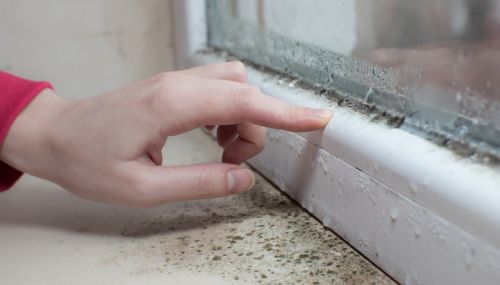
Children living in damp and overcrowded homes missed three weeks more of school over the course of compulsory education than their peers in better-quality housing.
New UCL-led research published in the Journal of Epidemiology and Community Health also finds children in England living in poorer-quality housing did worse in maths and English exams. One in seven (15%) children born at the turn of the century lived in homes with damp, while one in eight (12%) lived in homes that were overcrowded at age 7.
Lead author, Dr Gergo Baranyi (UCL Centre for Longitudinal Studies) said: “Poor quality housing doesn’t just affect children’s health, it plays a role in their educational outcomes too. This is one of the first studies to look at the links between housing quality and school absence. Children living in overcrowded and damp homes tend to experience more health problems so are likely to miss more school and may find it difficult to catch up on their studies.
“Those in overcrowded homes may lack a suitable place to study, potentially impacting their performance in school tests.”
Researchers from the UCL Centre for Longitudinal Studies and City St Georges, University of London examined data from 7,000 children born in 2000-02 who are taking part in the Millennium Cohort Study. When the study participants were age seven, their parents answered a series of questions about their housing and home environment.
Study participants were classed as living in lower-quality homes if they experienced at least two poor housing conditions. These included, for example, damp, lack of central heating, or overcrowding. Information on state school pupils’ absences and educational attainment from age five to 16 was taken from their National Pupil Database records. In England, 84% of authorised absences are health-related, such as medical appointments, or sickness.
By the end of their school careers, children who lived in lower quality housing at age seven had missed, on average, 15.5 more days of school than those who lived in better homes during compulsory education (Years 1 to 11). They also had 2%-5% lower scores, on average, in standardised tests in English and maths taken in primary and secondary school.
Living in damp and overcrowded conditions was most strongly associated with lower school attendance, particularly during primary education. The research also found that children living in cold and overcrowded homes tended to have poorer school test results, particularly at GCSE level.
Dr Baranyi added: “Our new study indicates that improving housing conditions, especially reducing damp, overcrowding and updating heating systems and energy efficiency can have significant benefits for children’s health and education. Public health and housing policies targeting poorly maintained homes could help to narrow health and educational inequalities. This would particularly benefit disadvantaged pupils’ chances at school as well as their future labour market outcomes, because they are more likely to live in lower quality housing.”
Co-author, Dr Sierra Clark (School of Health and Medical Sciences at City St George’s, University of London) said: “The good news is that national and local governments in the UK are stepping up efforts to improve housing conditions. New 2024 building regulations, forthcoming legislation such as the Renters’ Rights Act, and updated guidance on health risks from hazards like damp and mould all signal a stronger commitment to tenant safety.
“The introduction of Awaab’s Law in October 2025 requires social landlords to investigate and fix dangerous damp and mould, and address emergency health hazards, within strict timeframes. Our findings show that investing in better housing may help to improve children’s futures and reduce health and educational inequalities for generations to come.”
Chief Executive of Shelter, Sarah Elliott, said: “It’s heartbreaking that so many children are struggling to balance their studies while growing up in poor quality housing. This includes a record 172,420 children who are stuck in cramped and grotty temporary accommodation because of successive government failure to build good quality social homes.
“Every day our frontline services hear from families in temporary accommodation who face long daily commutes after being shunted miles away from their children’s schools. Many struggle to get their children in as a result, while others arrive exhausted after sleepless nights in cramped and overcrowded accommodation, where they find it impossible to concentrate. How do we expect children to succeed in class without a safe and secure home?
“To protect children from experiencing the harms of homelessness and poor-quality housing, the government must unfreeze housing benefit to help families out of temporary accommodation right now. It must also ramp up the delivery of genuinely affordable social rent homes by setting a national target. We need 90,000 social homes a year for ten years to give every child a safe and secure home.”
LBC News Radio – Charlotte Lynch show
Times Educational Supplement – Pupils in crowded and damp homes miss more school, study finds
Housing quality and school outcomes in England: a nationally representative linked cohort study by Gergo Baranyi, Katie Harron, Sierra Clark, Emla Fitzsimons is available on the Journal of Epidemiology and Community Health website.
For more information or to speak to the researchers involved, please contact:
Ryan Bradshaw, UCL Centre for Longitudinal Studies
T: +44 (0)207 612 6516
E: r.bradshaw@ucl.ac.uk
Meghan Rainsberry, UCL Centre for Longitudinal Studies
T: +44 (0)207 612 6530
E: m.rainsberry@ucl.ac.uk
Housing quality – to assess the quality of study participants’ homes, the researchers looked at six housing conditions, classifying them into positive (0), intermediate (1) and negative (2). These included: accommodation type (0=house; 1=flat; 2=room, or other), floor level (0=ground floor; 1=1st floor; 2=basement/2nd floor or above), having access to a garden (0=sole access; 1=shared access; 2=no access) damp (0=no damp; 1=not much of a problem/some problem; 2=great problem), heating (0=central heating; 2=other types of heating) and overcrowding (0=2+ rooms per person; 1=1 to <2 rooms per person; 2=<1 room per person).
The Millennium Cohort Study (MCS) is a UK longitudinal birth study. It is following the lives of around 19,000 young people born across England, Scotland, Wales and Northern Ireland in 2000-02. It has tracked measures such as physical, socio-emotional, cognitive and behavioural development, economic circumstances, parenting, relationships and family life across the life course. MCS is core funded by the Economic and Social Research Council and a consortium of government departments. Data from the latest survey, the Millennium Study Age 23 Sweep are due to be available for researchers to download from the UK Data Service in 2026. www.cls.ucl.ac.uk/mcs
Ryan Bradshaw
Editorial Content Manager
Phone: 020 7612 6516
Email: r.bradshaw@ucl.ac.uk
Centre for Longitudinal Studies
UCL Social Research Institute
20 Bedford Way
London WC1H 0AL
Email: clsdata@ucl.ac.uk