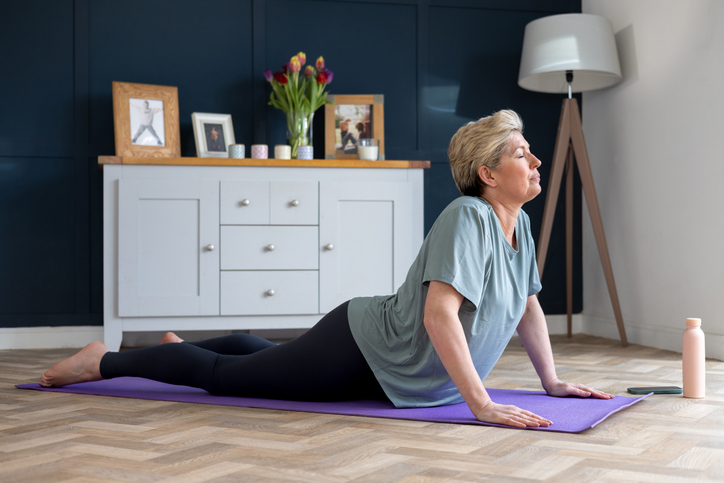
Most members of gen X in their early 50s say they value their health, relationships and independence more than money, according to new UCL research.
However, the new briefing paper by the UCL Centre for Longitudinal Studies finds that in midlife a quarter (26%) of this generation rate their health in general as ‘poor’ or ‘fair’. One in five (20%) report symptoms of psychological distress.
Co-author, Professor George Ploubidis (UCL Centre for Longitudinal Studies) said: “These new insights reveal what matters most to gen X as they reach their early 50s. While they value their health, a large proportion report physical and mental health difficulties, suggesting that some may be struggling with the aspect of life most important to them.”
What the researchers looked at
The researchers analysed data from around 8,000 people born in England, Scotland and Wales during one week in 1970 who are taking part in the 1970 British Cohort Study. They examined information reported by participants on their physical and mental health during 2021-2024 when they were in their early 50s.
Study members rated how important different aspects of life were to them on a scale of 1 to 10. Overall, health scored highest (9.3) for both men and women and across household income groups. Friendships (8.9) came slightly ahead of marriage/partnership (8.7) and independence (8.6), while having a fulfilling job (7.9), home ownership (7.8), children (7.5) and having money (6.1) scored lower.
Two in five (41%) of those born in 1970 rated their health in general as ‘excellent’ or ‘very good’. Just under a third were living with obesity (32%) with around one in 11 (9%) ever having had diabetes. Although there were minimal differences by sex, there were stark disparities by household income levels.
The most well-off were more than twice as likely to say they were in excellent or very good health compared to those on the lowest incomes (59% v 24%) and were three times less likely to report ever being diabetic (5% v 13%). A quarter of those from the highest income group (24%) were currently classified as living with obesity compared to a third (33%) of those from the lowest income households.
Generational inequalities
Members of gen X appeared to be in poorer health than the baby boomers were when they entered their 50s in 2008. Gen X were less likely to report excellent or very good health in general (41% v 50%), and were also more likely to be living with obesity (32% v 26%) and diabetes (9% v 6%).
Looking at their mental health in midlife, gen X women were significantly more likely to report symptoms of psychological distress than men (26% v 15%). Differences by income were also stark, with people from the lowest income households being four times as likely as individuals in the most affluent homes to have a high number of symptoms (37% to 9%).
One in three people (33%) reported they had seen a doctor about their mental health, with women almost twice as likely as men (42% v 23%). Women in the 1970 generation were also more likely than their baby boomer peers to have reached out to a doctor about their mental health in their early 50s (42% v 32%).
Our study reveals deep inequalities among gen X, with those from the lowest income households at greater risk of both physical and mental health difficulties.
 Vanessa Moulton, Senior Research Fellow
Co-author, Dr Vanessa Moulton (UCL Centre for Longitudinal Studies) added: “Our study reveals deep inequalities among gen X, with those from the lowest income households at greater risk of both physical and mental health difficulties. The findings also show that more members of gen X are in worse health in their early 50s than their baby boomer peers when at a similar age.
“Given the critical importance of midlife health and the rising demand for mental health support, this new evidence highlights the need for physical and mental health resources to reach those who need them most. Providing accessible, practical advice can help individuals improve their health in midlife, allowing them to age better, remain active, and lead fulfilling lives.”
Media coverage of this research
The Times (£) – Generation X in worse health in their fifties than baby boomers
Notes to Editors
Read: Health and wellbeing: initial findings from the 1970 British Cohort Study at Age 51, by Vanessa Moulton, Sam Parsons, Bozena Wielgoszewska and George Ploubidis.
Study methodology
‘Values’ question – at age 51, study participants rated the aspects of life they valued most including: health; having a lot of money; having children; having a fulfilling job; being independent; owning your own home; having a good marriage or partnership; and, having good friends. For each one they were asked to rate on a scale from 1 to 10 how important each one is to them, where ‘1’ equals ‘Not important at all’, and ‘10’ equals ‘Very important’.
Generational labels – generation X is typically defined as those born between 1965 and 1980 making this group aged between 46 and 61. The baby boomer generation are those born between 1946 and 1964, and now aged between 62 to 80 years old.